· Classical
Armenian premiere of David Halajian's "Mater Dolorosa" to be held in Chamber music hall

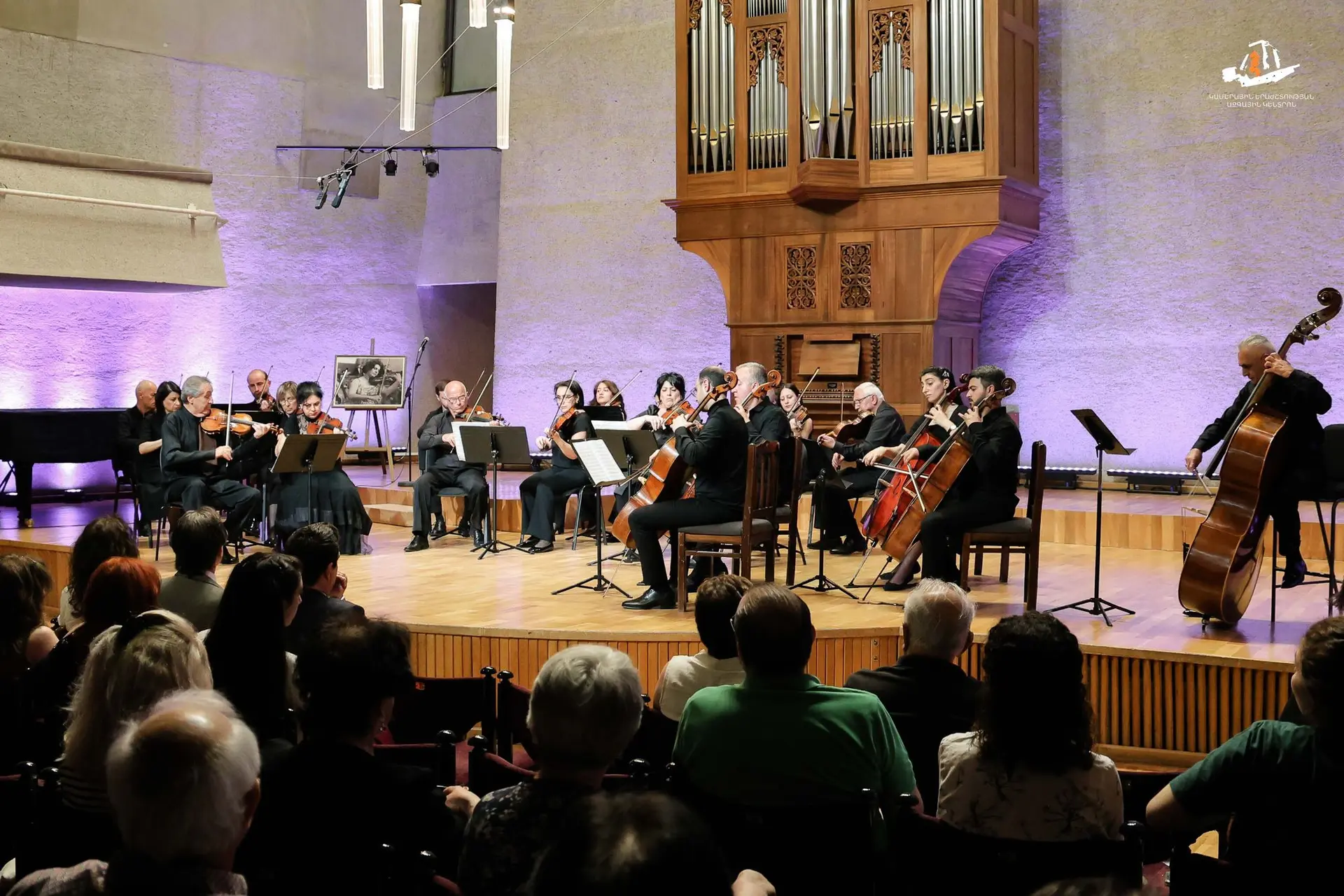
Composer David Haladjian's work "Mater Dolorosa" (Armenian premiere) will be presented at Komitas Chamber Music House on October 13 at 7 p.m. The concert will be performed by the State Chamber Orchestra of Armenia (artistic director and chief conductor: Vahan Martirosyan), the State Chamber Choir of Armenia (artistic director and chief conductor: Robert Mlkeyan), the Yerevan State Chamber Choir (artistic director and conductor: Kristina Voskanyan), the Akusma Chamber Choir. (Switzerland, artistic director and conductor: Davit Halajyan).
Soprano Gunhild Alsvik (Norway), saxophonist Remo Schneider (Switzerland), pianist Anahit Ter-Tachatyan (Germany), and Arsen Ter-Tachatyan (drums/ Germany) will perform as soloists. Conductor: David Haladjian.
Stabat Mater Dolorosa, a medieval poem, with high poetic skill and deep emotionality, describes the feelings and sorrow of Our Lady standing before the crucified Jesus and mourning the suffering of her Son.
In a work based on this text, Davit Haladjian, with the rich expressiveness and profound power of music, expresses the emotions and feelings, sympathy, and compassion of a child-bearing mother and parent in general through the image of the Mother of God.
With his music, the composer tries to get out of the vortex of depression and unbearable sorrow described in the text and lead the listener to the light, to see at least a hint of hope.
Soprano Gunhild Alsvik (Norway), saxophonist Remo Schneider (Switzerland), pianist Anahit Ter-Tachatyan (Germany), and Arsen Ter-Tachatyan (drums/ Germany) will perform as soloists. Conductor: David Haladjian.
Stabat Mater Dolorosa, a medieval poem, with high poetic skill and deep emotionality, describes the feelings and sorrow of Our Lady standing before the crucified Jesus and mourning the suffering of her Son.
In a work based on this text, Davit Haladjian, with the rich expressiveness and profound power of music, expresses the emotions and feelings, sympathy, and compassion of a child-bearing mother and parent in general through the image of the Mother of God.
With his music, the composer tries to get out of the vortex of depression and unbearable sorrow described in the text and lead the listener to the light, to see at least a hint of hope.