· Classical
"Almast". Spendiaryan's swan song
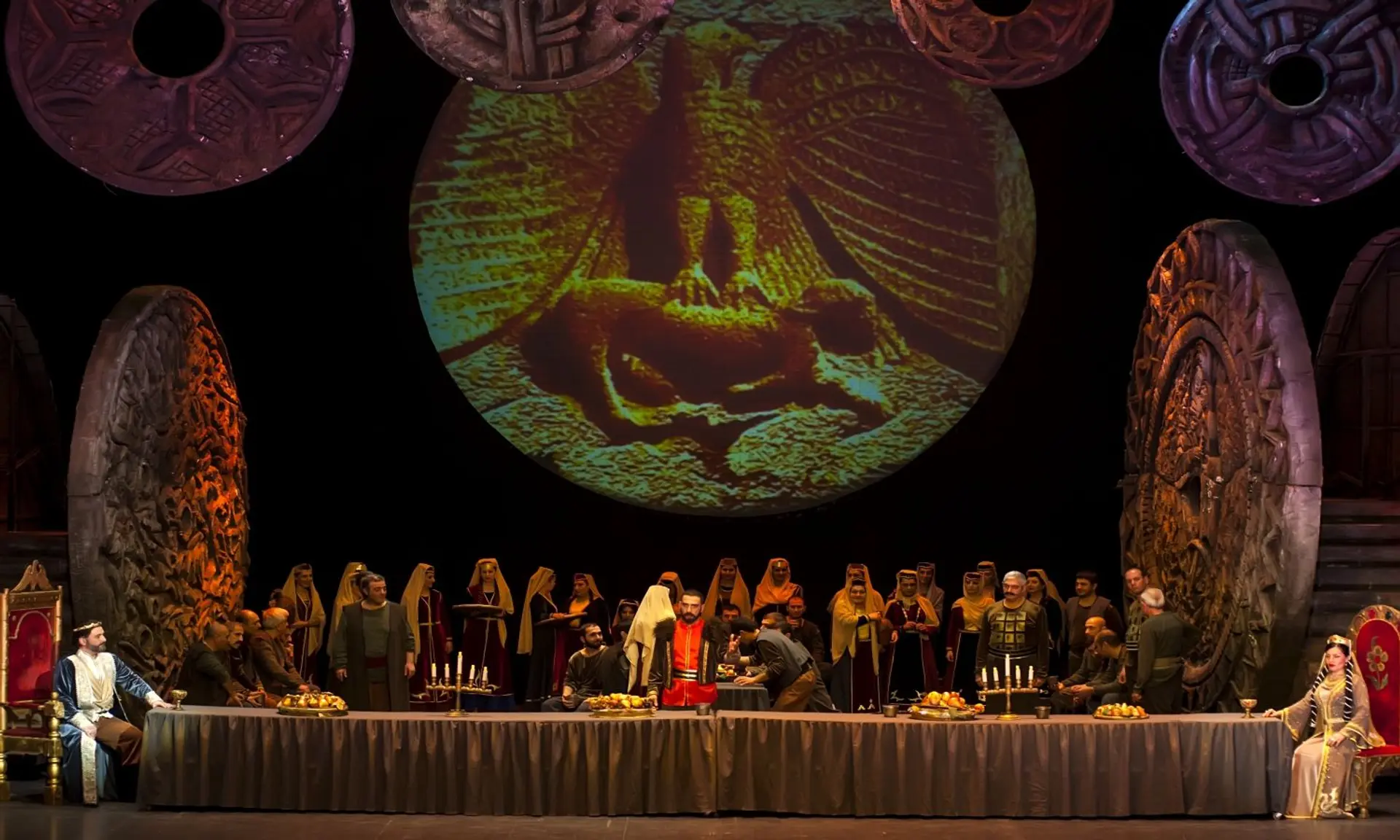
Opera "Almast" based on Hovhannes Tumanyan's poem "Taking Tmkaberd", is reflecting the heroic-liberation struggle of the Armenian people. The composer worked on the opera during the last 10 years of his life, from 1918 to 1928. The plot of the opera was chosen by Alexander Spendiaryan and Hovhannes Tumanyan in 1916, during the meeting in Tbilisi (Georgia). The libretto of "Almast" opera was written by Sofia Parnok.
We get acquainted with interesting details related to the history of opera creation from Nvard Tumanyan's memories. "Alexander Spendiaryan often visited my father. He sometimes came to our house for dinner and spent the evenings with us.
Spendiaryan became interested in the poem "Anush". But after getting acquainted with the material, he found it completely unknown. They decided to go to Lori together in the summer. Then the father red "Parvana". The composer liked it and found it more attractive for the opera, but noticed that the plot was small. He asked my father to expand some passages, add songs to write an opera. Dad seemed to be able to read any of it and read "Tmkaberd Arum".
Spendiaryan jumped up happily and started looking around the room excitedly. He asked my father to translate the whole poem for him literally. He especially liked the overture. He walked and uttered excitedly։
"Hey, gentlemen, listen to the wandering troubadour," he asked his father to read the poem again.
They worked on it until late at night, dividing the poem into roles and drawing pictures.
… At the request of the father, the opera was to be called "Gohar" after the princess. But, as Alexander Spendiaryan later explained. The resurrection of two vowels, “o” and “a”, prevented him from writing the music, so "Gohar" replaced the synonym "Almast" with that name. "
This memory gives us a complete picture of how this particular plot was chosen, why the opera was named "Almast" (Diamond). The opera consists of 4 acts.
The "Almast "actually became Spendiaryan's swan song. It is the peak of his work, a precious gift to the Armenian people. Spendiarov really left a bright memory. Let it remain for generations. ”,- Martiros Saryan.
The text is provided by A. Spendiaryan House-Museum
Photo by Tigran Arakelyan
We get acquainted with interesting details related to the history of opera creation from Nvard Tumanyan's memories. "Alexander Spendiaryan often visited my father. He sometimes came to our house for dinner and spent the evenings with us.
Spendiaryan became interested in the poem "Anush". But after getting acquainted with the material, he found it completely unknown. They decided to go to Lori together in the summer. Then the father red "Parvana". The composer liked it and found it more attractive for the opera, but noticed that the plot was small. He asked my father to expand some passages, add songs to write an opera. Dad seemed to be able to read any of it and read "Tmkaberd Arum".
Spendiaryan jumped up happily and started looking around the room excitedly. He asked my father to translate the whole poem for him literally. He especially liked the overture. He walked and uttered excitedly։
"Hey, gentlemen, listen to the wandering troubadour," he asked his father to read the poem again.
They worked on it until late at night, dividing the poem into roles and drawing pictures.
… At the request of the father, the opera was to be called "Gohar" after the princess. But, as Alexander Spendiaryan later explained. The resurrection of two vowels, “o” and “a”, prevented him from writing the music, so "Gohar" replaced the synonym "Almast" with that name. "
This memory gives us a complete picture of how this particular plot was chosen, why the opera was named "Almast" (Diamond). The opera consists of 4 acts.
The "Almast "actually became Spendiaryan's swan song. It is the peak of his work, a precious gift to the Armenian people. Spendiarov really left a bright memory. Let it remain for generations. ”,- Martiros Saryan.
The text is provided by A. Spendiaryan House-Museum
Photo by Tigran Arakelyan