· Folk
The presentation of "Labour Songs" volume of the “A Thousand and One Songs" collection held at Komitas Museum-Institute
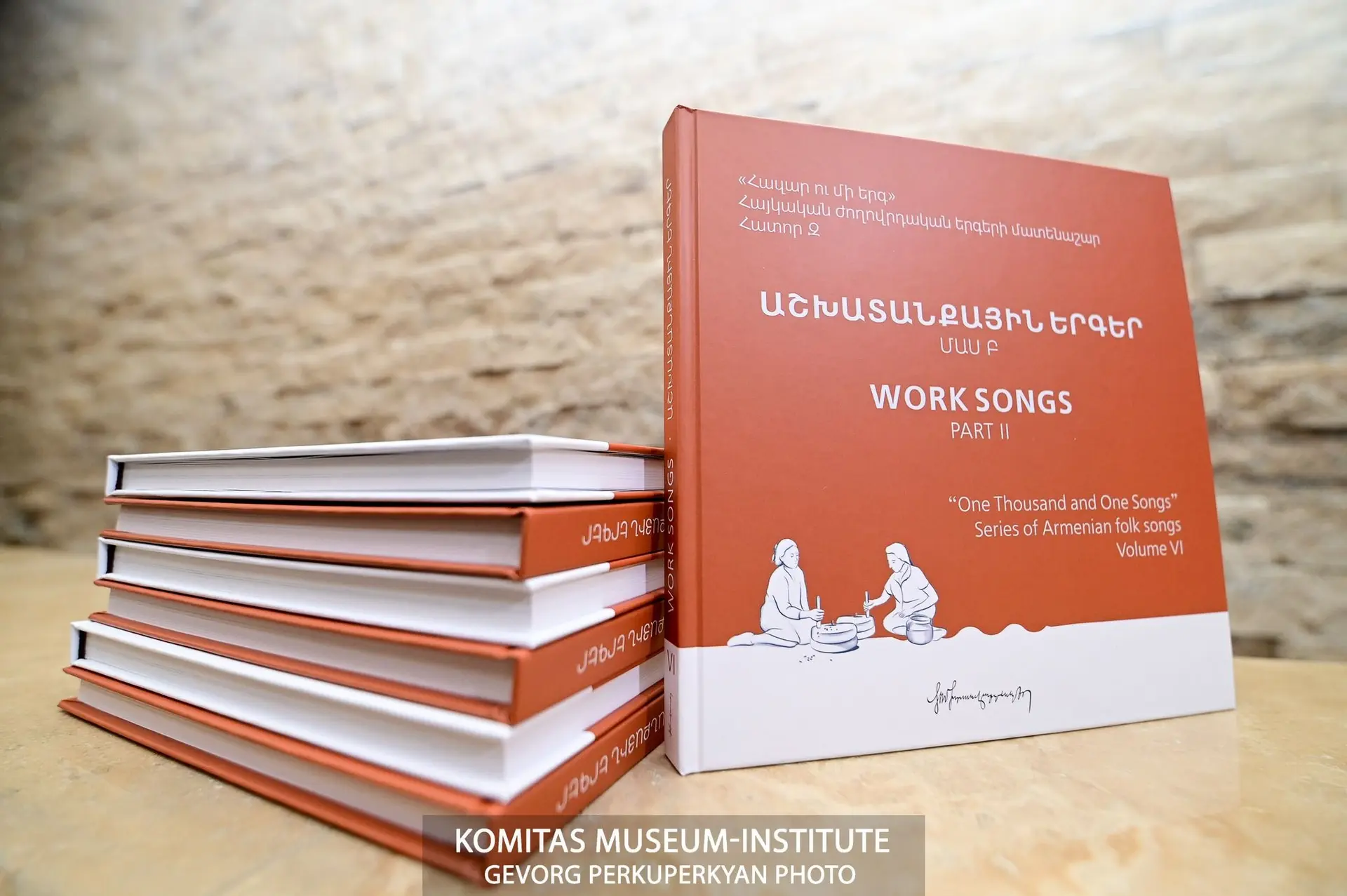
By the unanimous decision of the UNESCO Executive Board, the collection of works by Komitas Vardapet has been included in the Memory of the World International Register. The presentation of "Labour Songs" volume of the “A Thousand and One Songs" collection of Armenian folk songs was held at Komitas Museum-Institute, and the VR exhibition “Komitas’ Study” was launched.
ESCS Minister Zhanna Andreasyan expressed her gratitude to the partners and the research team noting: “The fact that the collection of works by Komitas Vardapet has been included in the Memory of the World International Register by the unanimous decision of the UNESCO Executive Board, is the result of a consistent state policy. A significant aspect of the procedure involves extensive research, ensuring that the application is properly prepared in compliance with international standards.”
According to the Director of Komitas Museum-Institute Nikolay Kostandyan, January 29 is symbolic for the museum: this date marks the museum's opening nine years ago. “This year also marks the 155th anniversary of Komitas, for which we have been planning extensive programs. We are bound by the fact that Komitas Vardapet's collection of work is listed in the Memory of the World International Register. This has been an 8-year consistent work in collaboration with the Ministry of Education, Science, Culture and Sports, the Ministry of Foreign Affairs and the museum,” noted Director of Komitas Museum-Institute Nikolay Kostandyan.
Tatevik Shakhkulyan, the head of the museum's scientific department, in turn, mentioned the significant interest of international researchers in Komitas Vardapet’s art, highlighting the need to register the collection. She additionally informed that a new series of publications of Komitas' works has begun, in which internationalization and accessibility enhancements are important.
Tatevik Shakhkulyan also introduced the collection “Labor Songs”(Ashkhatankayin yerger) from the series of Armenian folk songs “A Thousand and One Song” (Hazar u mi yerg).
“The museum regularly runs educational programs, and foreign participants encounter language barriers. To fill this gap, we have launched a publication of a series of volumes. Each volume has fifty examples of Armenian folk music, each with a distinct genre and corresponding images,” said Tatevik Shakhkulyan.
ESCS Minister Zhanna Andreasyan expressed her gratitude to the partners and the research team noting: “The fact that the collection of works by Komitas Vardapet has been included in the Memory of the World International Register by the unanimous decision of the UNESCO Executive Board, is the result of a consistent state policy. A significant aspect of the procedure involves extensive research, ensuring that the application is properly prepared in compliance with international standards.”
According to the Director of Komitas Museum-Institute Nikolay Kostandyan, January 29 is symbolic for the museum: this date marks the museum's opening nine years ago. “This year also marks the 155th anniversary of Komitas, for which we have been planning extensive programs. We are bound by the fact that Komitas Vardapet's collection of work is listed in the Memory of the World International Register. This has been an 8-year consistent work in collaboration with the Ministry of Education, Science, Culture and Sports, the Ministry of Foreign Affairs and the museum,” noted Director of Komitas Museum-Institute Nikolay Kostandyan.
Tatevik Shakhkulyan, the head of the museum's scientific department, in turn, mentioned the significant interest of international researchers in Komitas Vardapet’s art, highlighting the need to register the collection. She additionally informed that a new series of publications of Komitas' works has begun, in which internationalization and accessibility enhancements are important.
Tatevik Shakhkulyan also introduced the collection “Labor Songs”(Ashkhatankayin yerger) from the series of Armenian folk songs “A Thousand and One Song” (Hazar u mi yerg).
“The museum regularly runs educational programs, and foreign participants encounter language barriers. To fill this gap, we have launched a publication of a series of volumes. Each volume has fifty examples of Armenian folk music, each with a distinct genre and corresponding images,” said Tatevik Shakhkulyan.