· Classical
The Three Tenors who changed classical music forever
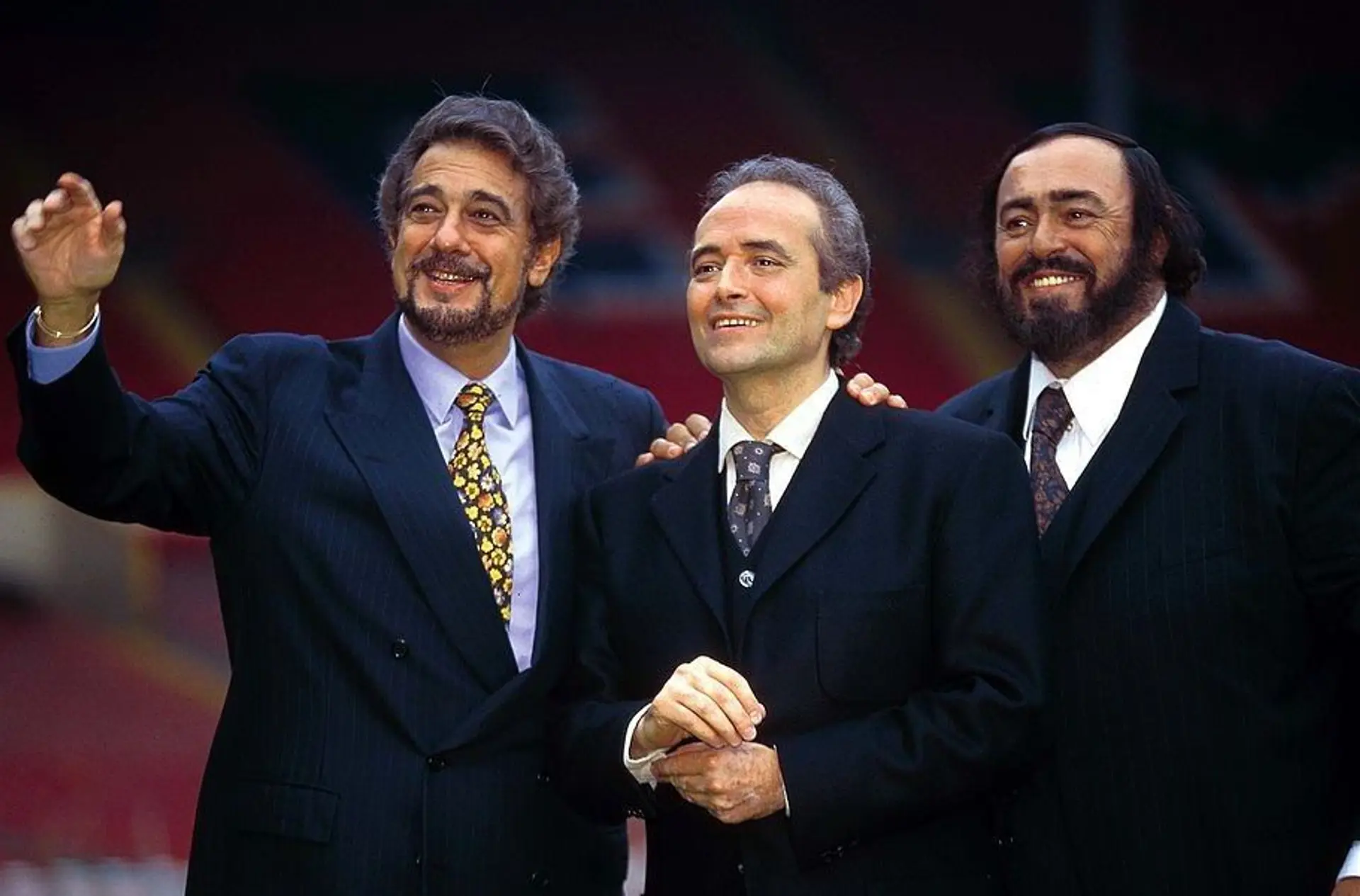
The Three Tenors were an operatic singing group during the 1990s and early 2000s, consisting of Spaniards Plácido Domingo and José Carreras, and Italian Luciano Pavarotti. It is not by chance that when talking about opera, the names of these artists are mentioned first, because thanks to them opera art became accessible to many people.
The beginning
The trio began their collaboration with a performance at the ancient Baths of Caracalla in Rome, Italy, on 7 July 1990, the eve of the 1990 FIFA World Cup Final․ It was held to raise money for Carreras's foundation, the José Carreras International Leukemia Foundation. It was also a way for his friends Domingo and Pavarotti to welcome Carreras back into the world of opera after undergoing successful treatment for leukemia. The Three Tenors' repertoire ranged from opera to Broadway to Neapolitan songs and pop hits. The group's signature songs included "Nessun Dorma" from Puccini's opera Turandot․
Records
The success of The Three Tenors in Rome was unexpected and unprecedented (over a million people around the world). The TV coverage for The Three Tenors’ Roman performance was highly unusual for classical music. They broke the record of soprano Kiri Te Kanawa at the Royal Wedding of 1981, which was watched by 750 million people around the world. Besides, the recording of the debut concert became the best-selling classical album of all time.
Tenor’s activity
The three subsequently sang together in concerts produced by Hungarian Tibor Rudas and other producers, at Dodger Stadium in Los Angeles to coincide with the final match of the 1994 FIFA World Cup, at the Champ de Mars under the Eiffel Tower during the 1998 FIFA World Cup, and in Yokohama for the 2002 FIFA World Cup. Nearly 50,000 people attended their 1994 concert at Dodger Stadium and Around 1.3 billion viewers worldwide watched it. Zubin Mehta conducted the performances in 1990 and 1994. The Paris concert was conducted by James Levine.
End of activity
In 2005, Plácido Domingo announced the end of the trio's activities. The reason was Luciano Pavarotti's health problems. It was the only right decision because the legendary artists were really irreplaceable.
Scandals
For their concert in Rome in 1990, the singers agreed to accept relatively small flat fees for the recording rights to their concert, which they then donated to charity. Their album unexpectedly reaped millions in profits for Decca Records, causing some resentment on the part of the tenors, who officially received no royalty payments. According to a press, the record company paid Pavarotti on the side, in order to keep one of their top contracted artists content. Pavarotti denied this, insisting: "We got nothing”. A few years later his former agent and manager Herbert Breslin wrote that Pavarotti had indeed secretly received $1.5 million that the other two tenors, who were not under contract to Decca, didn’t receive.
Latter German government accused the tenors of owing large back taxes. Their concert organizer and promoter, Matthias Hoffmann, who was in charge of their taxes at the time, was sentenced to jail time for his role in the alleged tax evasion
Criticism
While the Three Tenors were applauded by many for introducing opera to a wider audience, some opera purists rebuked the group. Domingo responded to critics in a 1998 interview: "The purists, they say this is not opera. Of course, it's not opera, it doesn't pretend to be an opera… We respect it very much when people criticize it. That's fine. They shouldn't come... But they should leave the people who are coming and are happy."
Other critics such as Martin Bernheimer complained that the tenors performed for excessive financial remuneration, rather than art. On their first worldwide tour, each tenor received around one million dollars per concert – unheard of for classical musicians. In a joint interview with his colleagues, Pavarotti responded to complaints about their incomes: "We make the money we deserve. We're not forcing someone to pay us." Domingo added about the world of opera: " For 30 years we have given in blood the best of our lives and our careers. You think we don't deserve money?" Carreras, for his part, stressed how little they made compared to many athletes, pop singers, and movie stars.
The precedent
It's been almost 20 years since the trio ceased its activities, but it became a precedent for different "Three Tenors" and "Three Sopranos" formats. All over the world, tenors perform joint concerts from time to time, commercial projects are created.
The Armenian precedent։ A concert in the format of "Three Tenors" was also held in Armenia. In 2021 In December, the year-end concert of the National Philharmonic Orchestra of Armenia was marked by the performances of tenors Arsen Soghomonyan, Liparit Avetisyan, and Tigran Hakobyan.
By Sona Khachatryan
Photo: Getty image
The beginning
The trio began their collaboration with a performance at the ancient Baths of Caracalla in Rome, Italy, on 7 July 1990, the eve of the 1990 FIFA World Cup Final․ It was held to raise money for Carreras's foundation, the José Carreras International Leukemia Foundation. It was also a way for his friends Domingo and Pavarotti to welcome Carreras back into the world of opera after undergoing successful treatment for leukemia. The Three Tenors' repertoire ranged from opera to Broadway to Neapolitan songs and pop hits. The group's signature songs included "Nessun Dorma" from Puccini's opera Turandot․
Records
The success of The Three Tenors in Rome was unexpected and unprecedented (over a million people around the world). The TV coverage for The Three Tenors’ Roman performance was highly unusual for classical music. They broke the record of soprano Kiri Te Kanawa at the Royal Wedding of 1981, which was watched by 750 million people around the world. Besides, the recording of the debut concert became the best-selling classical album of all time.
Tenor’s activity
The three subsequently sang together in concerts produced by Hungarian Tibor Rudas and other producers, at Dodger Stadium in Los Angeles to coincide with the final match of the 1994 FIFA World Cup, at the Champ de Mars under the Eiffel Tower during the 1998 FIFA World Cup, and in Yokohama for the 2002 FIFA World Cup. Nearly 50,000 people attended their 1994 concert at Dodger Stadium and Around 1.3 billion viewers worldwide watched it. Zubin Mehta conducted the performances in 1990 and 1994. The Paris concert was conducted by James Levine.
End of activity
In 2005, Plácido Domingo announced the end of the trio's activities. The reason was Luciano Pavarotti's health problems. It was the only right decision because the legendary artists were really irreplaceable.
Scandals
For their concert in Rome in 1990, the singers agreed to accept relatively small flat fees for the recording rights to their concert, which they then donated to charity. Their album unexpectedly reaped millions in profits for Decca Records, causing some resentment on the part of the tenors, who officially received no royalty payments. According to a press, the record company paid Pavarotti on the side, in order to keep one of their top contracted artists content. Pavarotti denied this, insisting: "We got nothing”. A few years later his former agent and manager Herbert Breslin wrote that Pavarotti had indeed secretly received $1.5 million that the other two tenors, who were not under contract to Decca, didn’t receive.
Latter German government accused the tenors of owing large back taxes. Their concert organizer and promoter, Matthias Hoffmann, who was in charge of their taxes at the time, was sentenced to jail time for his role in the alleged tax evasion
Criticism
While the Three Tenors were applauded by many for introducing opera to a wider audience, some opera purists rebuked the group. Domingo responded to critics in a 1998 interview: "The purists, they say this is not opera. Of course, it's not opera, it doesn't pretend to be an opera… We respect it very much when people criticize it. That's fine. They shouldn't come... But they should leave the people who are coming and are happy."
Other critics such as Martin Bernheimer complained that the tenors performed for excessive financial remuneration, rather than art. On their first worldwide tour, each tenor received around one million dollars per concert – unheard of for classical musicians. In a joint interview with his colleagues, Pavarotti responded to complaints about their incomes: "We make the money we deserve. We're not forcing someone to pay us." Domingo added about the world of opera: " For 30 years we have given in blood the best of our lives and our careers. You think we don't deserve money?" Carreras, for his part, stressed how little they made compared to many athletes, pop singers, and movie stars.
The precedent
It's been almost 20 years since the trio ceased its activities, but it became a precedent for different "Three Tenors" and "Three Sopranos" formats. All over the world, tenors perform joint concerts from time to time, commercial projects are created.
The Armenian precedent։ A concert in the format of "Three Tenors" was also held in Armenia. In 2021 In December, the year-end concert of the National Philharmonic Orchestra of Armenia was marked by the performances of tenors Arsen Soghomonyan, Liparit Avetisyan, and Tigran Hakobyan.
By Sona Khachatryan
Photo: Getty image