Biography
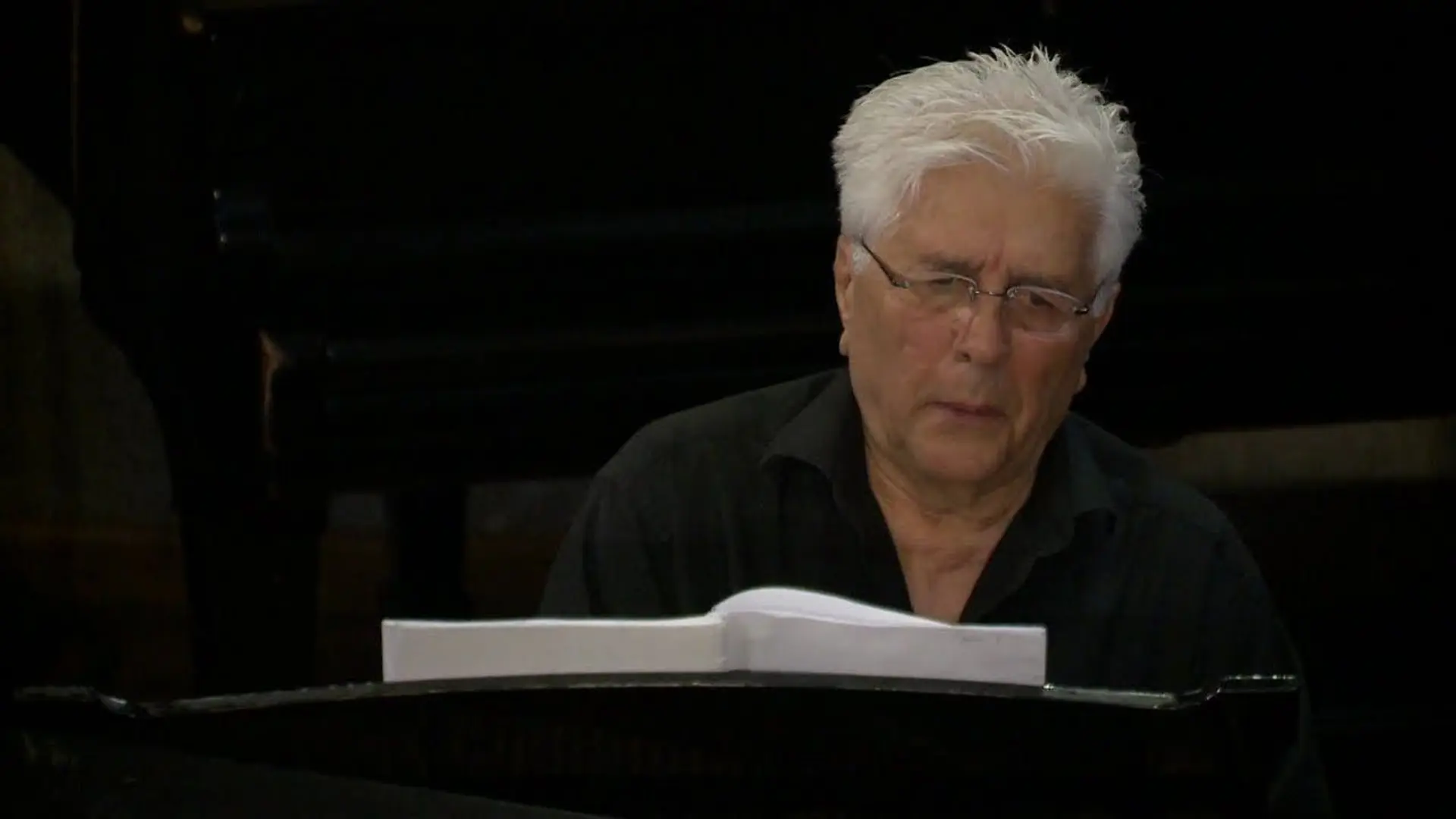
Alan Hovhannes was born as Alan Vaness Chakmakjian in Somerville, Massachusetts, to Haroutioun Hovanes Chakmakjian (an Armenian chemistry professor at Tufts College who had been born in Adana, Turkey) and Madeleine Scott (an American of Scottish descent who had graduated from Wellesley College). When he was five, his family moved from Somerville to Arlington, Massachusetts. A Hovhaness family neighbor said his mother had insisted on moving from Somerville because of discrimination against Armenians there. After her death (on October 3, 1930), he began to use the surname "Hovaness" in honor of his paternal grandfather,[citation needed] and changed it to "Hovhaness" around 1944. He stated the name change from the original Chakmakjian reflected the desire to simplify his name because "nobody ever pronounced it right". However, Hovhaness' daughter Jean Nandi has written in her book Unconventional Wisdom," My father's name at the time of my birth was 'Hovaness', pronounced with the accent on the first syllable. His original name was 'Chakmakjian', but in the 1930s he wanted to get rid of the Armenian connection and so changed his name to an Americanized version of his middle name. Some years later, deciding to re-establish his Armenian ties, he changed the spelling to 'Hovhaness', accent on the second syllable; this was the name by which he later became quite famous."
Hovhaness was interested in music from a very early age. At the age of four, he wrote his first composition, a cantata in the early Italian style inspired by a song of Franz Schubert. His family was concerned about his late-night composing and about the financial future he could possibly have as an artist. He decided for a short time to pursue astronomy, another of his early loves. The fascination of astronomy remained with him through his entire life and composing career, with many works titled after various planets and stars.
Hovhaness's parents soon supported their son's precocious composing and set up his first piano lessons with a neighborhood teacher. Hovhaness continued his piano studies with Adelaide Proctor and then Heinrich Gebhard. By age 14 he decided to devote himself to composition. Among his early musical experiences were Baptist hymns and recordings of Gomidas Vartabed, an eminent Armenian composer. He composed two operas during his teenage years which were performed at Arlington High School, and composer Roger Sessions took an interest in his music during this time. Following his graduation from high school in 1929, he studied with Leo Rich Lewis at Tufts and then under Frederick Converse at the New England Conservatory of Music. In 1932, he won the Conservatory's Samuel Endicott prize for composition with his Sunset Symphony (elsewhere entitled Sunset Saga).
In July 1934, Hovhaness traveled with his first wife, Martha Mott Davis, to Finland to meet Jean Sibelius, whose music he had greatly admired since childhood. The two continued to correspond for the next twenty years. In 1935, Hovhaness named his daughter and only child from his first marriage Jean Christina Hovhaness after Jean Christian Sibelius, her godfather and Hovhaness's friend for three decades.
During the 1930s and 1940s, Hovhaness famously destroyed many of his early works. He later claimed that he had burned at least 1000 different pieces, a process that took at least two weeks; elsewhere he claimed to have destroyed around 500 scores totaling as many as a thousand pages. In an interview with Richard Howard, he stated that the decision was based primarily on Sessions' criticism of his works of that period and that he wanted to make a new start in composition.
Hovhaness became interested in Armenian culture and music in 1940 as organist for the St. James Armenian Apostolic Church in Watertown, Massachusetts, remaining in this position for about ten years. In 1942, he won a scholarship at Tanglewood to study in Czech composer Bohuslav Martinů's master class. During a seminar in composition, while a recording of Hovhaness's first symphony was being played, Aaron Copland talked loudly in Spanish to Latin-American composers in the room; and at the end of the recording Leonard Bernstein went to the piano, played a melodic minor scale and rebuked the work as "cheap ghetto music". Apparently angered and distraught by this experience, he left Tanglewood early, abandoning his scholarship and again destroying a number of his works in the aftermath of that major disappointment.
The next year he devoted himself to Armenian subject matter[citation needed], in particular using modes distinctive to Armenian music, and continued in this vein for several years, achieving some renown and the support of other musicians, including radical experimentalist composer John Cage and choreographer Martha Graham, all the while continuing as a church organist.
Beginning in the mid-1940s, Hovhaness and two artist friends, Hyman Bloom and Hermon di Giovanno, met frequently to discuss spiritual and musical matters. All three had a strong interest in Indian classical music and brought many well-known Indian musicians to Boston to perform. During this period, Hovhaness learned to play the sitar, studying with amateur Indian musicians living in the Boston area. Around 1942, Bloom introduced Hovhaness to Yenovk Der Hagopian, a fine singer of Armenian and Kurdish troubadour songs, whose singing inspired Hovhaness.
Hovhaness was inducted into the National Institute of Arts and Letters (1951), and received honorary D.Mus. degrees from the University of Rochester (1958), Bates College (1959) and the Boston Conservatory (1987). He moved to Seattle in the early 1970s, where he lived for the rest of his life. In 1973, he composed his third and final ballet score for Martha Graham: Myth of a Voyage, and over the next twenty years (between 1973 and 1992) he produced no fewer than 37 new symphonies.
He created a major work, The Rubaiyat, A Musical Setting in 1975, which was for both narrator and orchestra and has been twice recorded. Rubaiyat refers to Rubaiyat of Omar Khayyam, a Persian mathematician, astronomer, and poet.
Continuing his interest in composing for Asian instruments, in 1981, at the request of Lou Harrison, he composed two works for the Indonesian gamelan orchestra which were premiered by the gamelan at Lewis & Clark College, under the direction of Vincent McDermott.
Hovhaness is survived by his sixth wife, the coloratura soprano Hinako Fujihara Hovhaness, who administers the Hovhaness-Fujihara music publishing company, as well as a daughter (from his first wife), harpsichordist Jean Nandi.
Significant archives of Hovhaness materials, comprising scores, sound recordings, photographs and correspondence are located at several academic centers, including Harvard University, University of Washington, the Library of Congress in Washington, D.C., the Armenian Cultural Foundation in Arlington, MA, and Yerevan’s State Museum of Arts and Literature in Armenia.