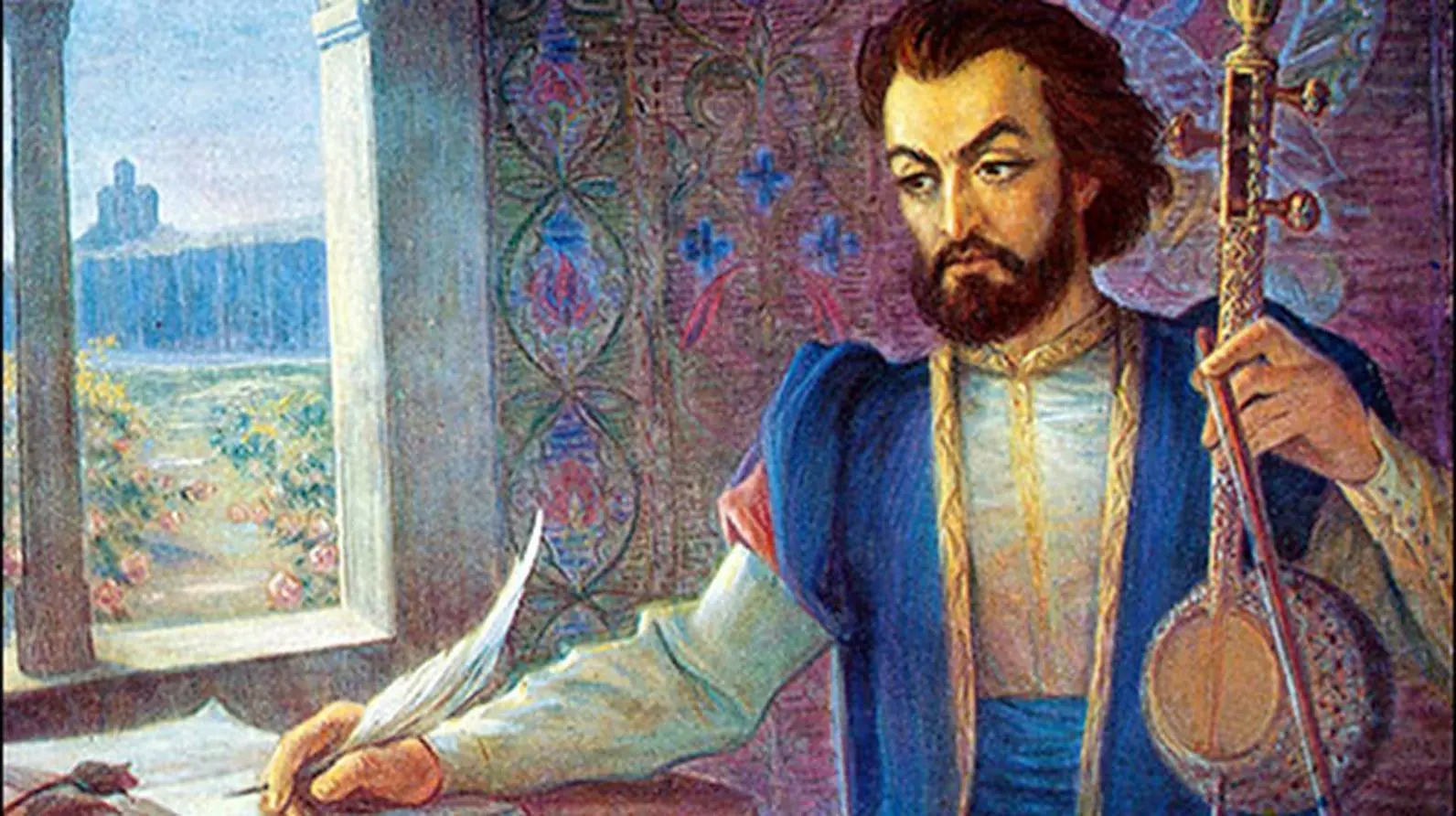
Kristapor Kara-Murza
Composer

Biography
Hampartsoum Limondjian (1768–1839) was a prominent Armenian musicologist, composer, and music theorist, best known for developing a new system of Armenian musical notation. His system played an important role in preserving, transcribing, and passing Armenian sacred and folk music on to future generations.
Hampartsoum Limondjian was born in Constantinople in 1768.
Musicians and music scholars of his time played a significant role in shaping Limondjian’s musical education. He studied Armenian liturgical chant, as well as Greek, Turkish, and European musical traditions. Thanks to his musical talent and knowledge, he gained the patronage of influential Armenian families of the period, particularly the Düzyan amiras. Their support enabled Limondjian to pursue musicological research and work towards his goal of preserving Armenia’s musical heritage.
In the late 18th and early 19th centuries, one of the most pressing challenges facing Armenian sacred music was the preservation of traditional chanting practices. The difficulties involved in reading and interpreting the khaz notation system, which had been used for centuries, meant that many melodies were preserved primarily through oral transmission. Limondjian recognized the need for a system that would allow music to be transcribed accurately and prevent melodies from being altered over time.
Between 1813 and 1815, he developed a new system of Armenian musical notation, which later became known as Limondjian notation. Based on traditional Armenian musical symbols, the system made it possible to record melodies and rhythmic durations in a more systematic way. It was intended not only for sacred chant but also for preserving other forms of Armenian musical heritage.
The notation system created by Limondjian came into widespread use during the 19th century. It was used to transcribe sharakans (Armenian liturgical hymns), services, and musical sections of the Divine Liturgy. Later, it also became an important tool for collecting and transcribing Armenian folk songs. Several prominent figures in Armenian music used the system, including Komitas, who transcribed numerous folk and sacred melodies as part of his research.
Limondjian was also involved in music education. Among his students were musicians who continued to develop the tradition of Armenian musical transcription. His work contributed to the dissemination of musical knowledge and fostered greater scholarly interest in Armenian sacred music.
Hampartsoum Limondjian died in Constantinople on June 29, 1839.